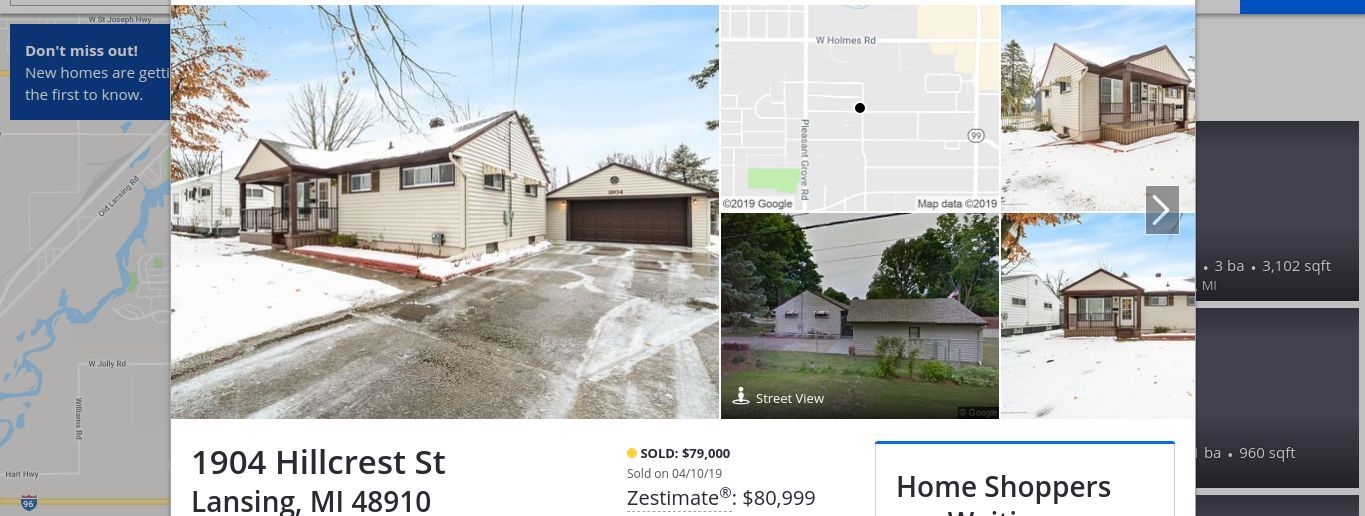
Terry had been helping take care of his mother's Lansing home as she grew older. She had owned the house for around 50 years, and Terry and his siblings had lived there when they were younger. When she died at age 90 in the summer of 2018, the property was not simply another house that needed to be listed.
It was part of settling her estate, but it was also a place connected to decades of family memory. In the winter of 2019, Terry called Alex to talk about getting the house on the market and sold.
A House Full of History—and a Lot of Outdated Carpet
The house had been cared for. It was in good condition. It also looked like a home that had been occupied by the same owner for a very long time.
The original record describes seafoam green and pink carpet throughout the house. The carpet was clean, but its age and colors were likely to narrow the buyer pool. The work was not to pretend the interior was updated. It was to present the property honestly and make the parts buyers could value easy to see.
Timing created another complication. The listing was being prepared for January or February—a quieter part of Michigan's real-estate calendar, when fewer buyers are typically active.
The First Decision Wasn't Marketing. It Was Price.
Before deciding how to promote the house, Alex completed a comprehensive market analysis. He reviewed what similar homes in the area had sold for during approximately the previous six months and considered the home's condition and neighborhood.
At this price point, relatively small dollar differences could become meaningful percentages. Pricing an approximately $80,000 property even a few thousand dollars too high could change how buyers perceived the value and how long the house sat on the market.
The list price: $79,900.
The goal was to put the house where the market evidence supported it—not price around the family's history with the home or assume buyers would negotiate down from an optimistic number.
Then We Had to Make an Outdated House Look Worth Seeing.
Once the price was set, the work shifted to presentation. We arranged professional photography with at least 20 high-quality images, prepared professional listing copy and built out the property's presentation on major home-search sites, including Zillow and Realtor.com.
The emphasis on those sites was deliberate. At this price range, listing-aggregation websites were expected to drive much of the buyer traffic. The listing needed enough information to answer the obvious questions and enough visual interest to make buyers request a showing.
The property was dated. The marketing didn't have to be.
The response showed that buyers were willing to look beyond the carpet when the price and presentation gave them a reason to see the property.
Four Days Later, There Were Multiple Offers.
Within four days, Alex received multiple offers. Some were at the $79,900 asking price, and several were above it.
Terry and his siblings were understandably pleased. But an offer is more than a price. Alex was concerned about the financial stability behind some of the offers and whether the buyers could complete the purchase.
Then the Deal Fell Apart.
The first accepted transaction did not make it to closing. The buyer ultimately withdrew because of financing problems. According to the original record, a recent employment change and temporary position became part of the financing issue.
An accepted offer is not the same thing as a closed sale.
The failure was frustrating, but it did not mean the original pricing and marketing strategy had failed. The first launch had already demonstrated that buyers wanted the house at that price.
So We Put the House Back on the Market.
Alex and the marketing team relaunched the listing and repeated the process. The photos, copy, pricing and online presentation went back to work.
Within another four days, the property again received multiple offers above asking. Several of the second-round offers were stronger than those from the first launch.
The second round produced an accepted offer about 5% above asking—with no seller concessions and the buyer taking responsibility for repairs.
The Highest Offer Wasn't Automatically the Final Price.
Because the accepted offer exceeded the asking price, Alex explained that appraisal could become an issue. If the property did not appraise at the contract price, the buyer's financing could limit what the transaction could support.
The house did not appraise for the full offer amount. That did not erase the value of the other terms. Terry received the full appraised value without agreeing to pay the buyer's closing costs and without taking on seller-paid repairs.
Price and terms both matter. A seller does not deposit the headline offer price. What matters is what survives financing, appraisal, negotiations, expenses and closing.
What Terry Ultimately Walked Away With
The property sold at its appraised value. Terry did not provide buyer closing-cost concessions, and the buyer took responsibility for repairs under the accepted terms.
The first transaction falling apart created another round of uncertainty. It also led to a new buyer and a structure that allowed Terry to avoid those additional seller expenses.
The Lesson Wasn't That the House Sold Fast.
Speed was part of the evidence, not the whole result. The sale required a price supported by comparable properties, presentation that helped buyers look beyond the dated interior and enough market exposure to create competition twice.
It also required looking beyond the highest number: considering financing strength, explaining appraisal risk, relaunching after the first buyer withdrew and negotiating terms that affected what Terry ultimately kept.
The first contract wasn't the finish line. Neither was the highest offer.
For Terry, the house was not inventory. It was the home his mother had owned for decades and a place his family had known for much of their lives.
Our job was narrower: sell it well.
This case study reflects a transaction from earlier in Alex Craig's real-estate career, before his current affiliation with Achieve Real Estate. Alex is currently a Michigan real estate salesperson affiliated with Achieve Real Estate.

Alex Craig
Alex Craig is a Michigan real estate salesperson affiliated with Achieve Real Estate. Licensed since 2017, his experience includes more than 50 closed transactions and over $10 million in represented real-estate sales volume, along with property valuation, investment and specialized real-estate work.
More About Alex →