Jim and Becky had lived at their Lansing-area horse property for 17 years. They had built memories there, operated a horse-boarding business and expected the property to remain home for much longer.
Then a series of health events changed their plans. They decided to close the boarding operation, sell the property and move to Florida for retirement.
The Decision Was Practical. It Wasn't Easy.
Letting go meant more than moving out of a four-bedroom house. It meant leaving the barns, stalls, riding spaces and daily rhythms that had shaped nearly two decades of their lives.
“The whole process was hard for us,” Becky said in the original client interview. “It was unexpected and more emotional than we thought.”
The real-estate assignment was clear: understand the property, explain it to the right audience and get the sale completed before winter narrowed an already specialized buyer pool.
The House Was Only One Part of the Property.
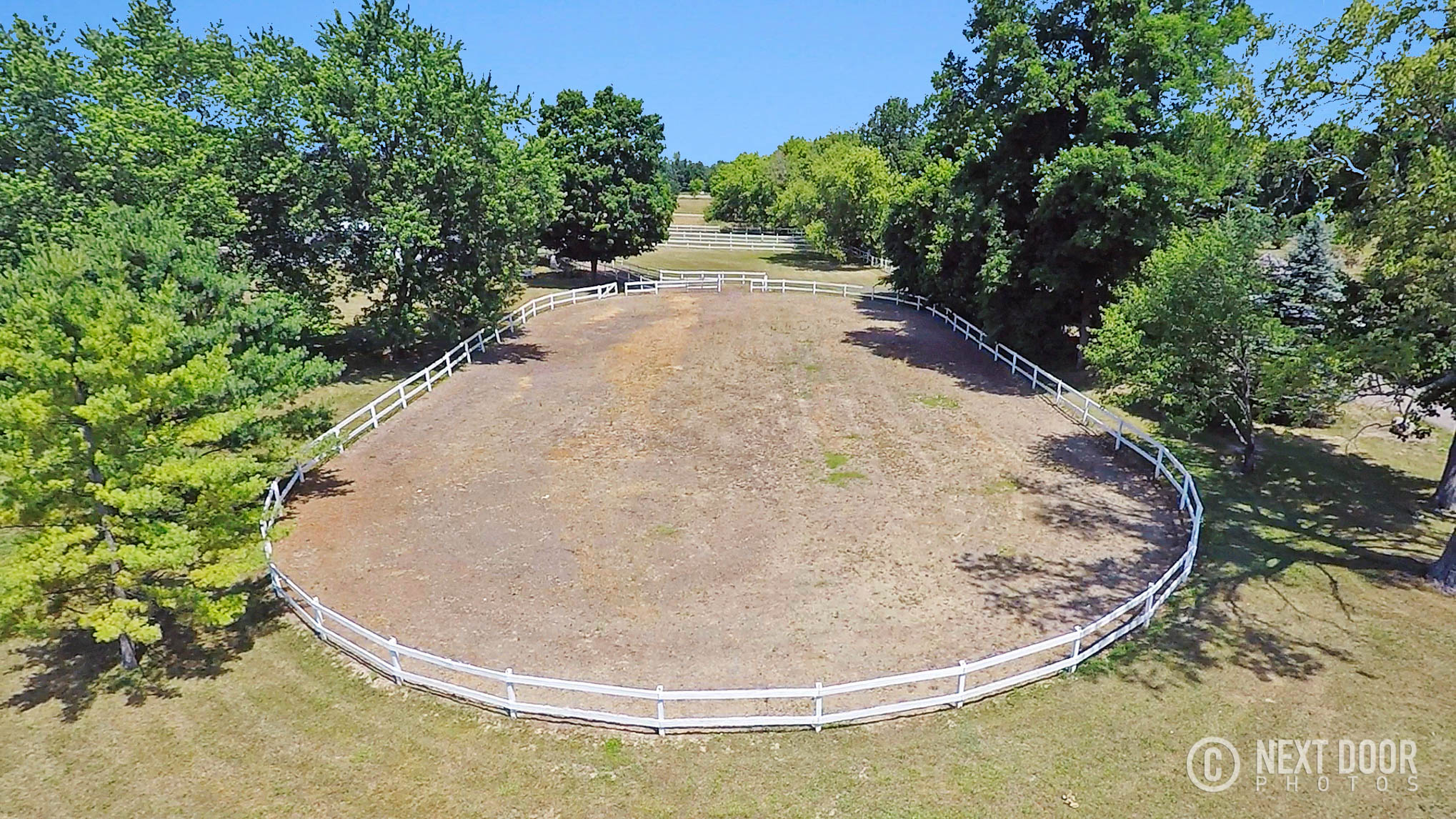
The approximately eight-acre property included a four-bedroom home of more than 2,800 square feet and two equestrian buildings. One barn contained six stalls, a private tack room, hay storage and access to a riding area. The other contained ten stalls, additional storage and an indoor riding area described in the original record as approximately 100 by 50 feet.
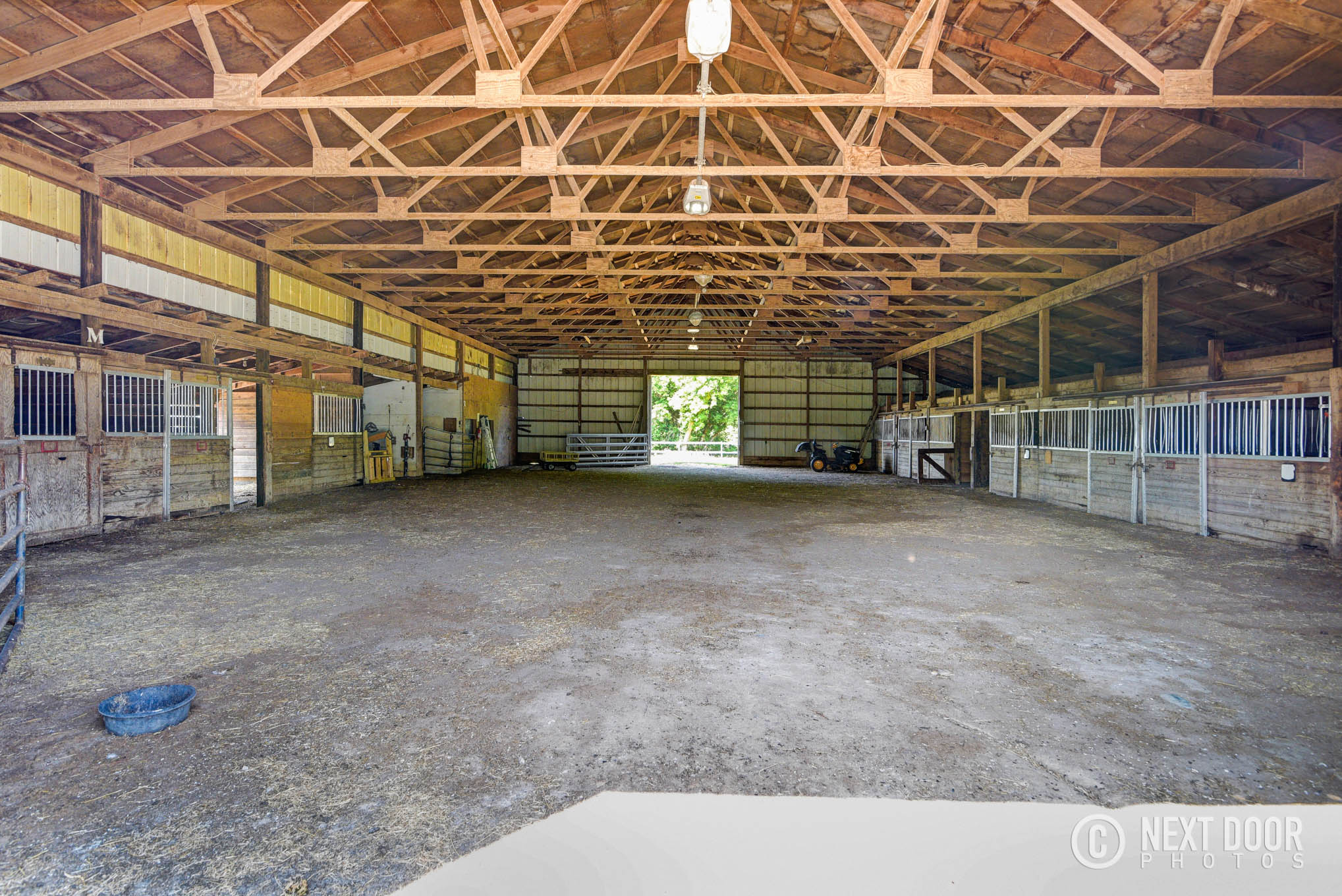
A conventional buyer might begin with bedrooms, bathrooms and finishes. The likely buyer for this property also needed to understand stall capacity, riding areas, fencing, storage and how the buildings and grounds worked together.
The marketing needed to sell the entire operation—not a house that happened to have a barn.
It Had Already Been Listed for Five Months.
Before Jim and Becky called Alex, the property had spent approximately five months on the market with another real-estate agent. According to the sellers, it produced only about three showings, and the people touring it were not horse-property buyers.
Becky remembered prospective buyers reacting as though the barn were a surprise. That response exposed the central problem: the listing was reaching people who might like the residence but did not value—or need—the equestrian infrastructure.
By the time the prior listing ended, it was early July. Jim and Becky wanted the property sold before winter. The new campaign also had to overcome accumulated days on market and earlier price reductions.
First, We Had to Find the Actual Audience.
Alex began by treating the property as specialized real estate. Professional imagery, a more deliberate listing description and aerial video helped buyers see the relationship between the home, barns, arena, fencing and acreage.
The listing also appeared on an equestrian-property website rather than relying solely on the MLS and general home-search portals. Presentation elements were tested to help the listing stand out among other horse properties.
Jim later summarized the difference simply: “Horse people have a different language and they all understand that language. Alex did his homework.”
Then the Marketing Followed the Buyer.
The campaign combined the revised listing presentation with specialty-site exposure, aerial video, direct outreach, Facebook advertising aimed at horse-related interests and Google search advertising around Michigan horse-property searches.
This was not a claim that every listing needs every available marketing channel. It was a response to a specific problem: a property with a narrow buyer pool had spent months being seen by the wrong people.
The Advertising Produced Measurable Attention.
The Facebook video generated 3,348 views of at least ten seconds. The historical campaign record reports a cost of $0.04 per qualifying view and approximately $135 in spend.
Google search advertising generated a reported click-through rate above 35% on the tested campaign. Another equestrian real-estate professional told Alex she seemed to encounter the property's marketing everywhere.
Those numbers did not close the transaction by themselves. They showed that the listing was finally being put in front of an audience interested in this type of property.
The Property Received an Offer in Under Three Months.
After the previous five-month listing produced limited activity, the focused campaign led to an offer in under three months. Jim and Becky were able to move forward with the retirement plan that had prompted the sale.
Five months with the prior listing. An offer in under three months after the property was repositioned for equestrian buyers.
The Lesson Wasn't “Run More Ads.”
The useful lesson is that specialized property should be explained and distributed with its likely buyer in mind. Strong photography and broad MLS exposure remained important, but they were not the entire plan.
The house, barns, riding areas and acreage had to become one coherent property story. Then that story had to reach people who could recognize its value.
More exposure only helps when the right people understand what they are seeing.
For Jim and Becky, the sale closed a 17-year chapter involving their home, their horses and their business. Our job was to find the next owner for the property they had built their lives around.
This case study reflects a transaction from earlier in Alex Craig's real-estate career, before his current affiliation with Achieve Real Estate. Alex is currently a Michigan real estate salesperson affiliated with Achieve Real Estate. Advertising measurements are reported from the original campaign record.

Alex Craig
Alex Craig is a Michigan real estate salesperson affiliated with Achieve Real Estate. Licensed since 2017, his work includes residential sales, investment property, property valuation and specialized real estate.
More About Alex →